Your organization isn't broken.
Most performance problems — conflict, drift, stalled growth, inconsistent leadership, cultural fragmentation — are not strategy failures. They are coherence failures. The organization has drifted from itself.
We diagnose what is actually happening and architect the path back to alignment.
You can feel the friction.
You built something real — a company, a team, an organization with genuine purpose behind it. Somewhere in the growth, the hiring, the pressure, the pace, the transitions, something shifted.
Not catastrophically. Gradually.
Leaders who used to pull together began pulling in different directions. Standards that once went without saying now go without being met. Culture that felt alive started feeling like a slogan. Communication that used to be direct became careful, then political, then avoided.
The gap between what you know is happening and what you can precisely diagnose — that is exactly where this work begins.
The right answers to
Most consultants address what's visible: strategy, structure, KPIs, communication tactics, training, accountability systems. The organizations that sustain performance have something underneath all of it — coherence. Identity, standards, leadership behavior, and operational reality reinforce each other. When that breaks down, everything downstream suffers. Not because the people are wrong, but because the system has drifted out of alignment with itself.
Founders who built faster than they matured
Growth outpaced the organizational identity. The systems that worked at twenty people are fracturing at two hundred. The founder carries more than the role requires, because the structure beneath them isn't built to hold the weight.
Leaders promoted without formation
Managers operating from unresolved insecurity. Executives with unclear roles. Organizations relying on loyalty instead of standards. Performance expectations that exist nowhere anyone can see them.
Culture that exists as slogans
Values on the wall, behaviors that contradict them daily. Alignment confused with agreement. Communication that turned emotional instead of structural. Standards that erode because no one enforces them consistently.
Organizational
Five integrated domains. Never in isolation. Always in sequence. We work one layer beneath the symptom — where identity, behavior, standards, leadership maturity, and operational reality either reinforce each other, or they don't.
Executive Alignment
When the people at the top are unclear, misaligned, or operating from unspoken assumptions, no amount of structure below them holds. We create the conditions for genuine executive alignment — not agreement, alignment — before anything else is built.
Culture Architecture
Culture is not what you say it is. It is what your standards, your leadership behavior, and your accountability systems produce daily. We translate values into observable behavior, make standards enforceable, and build culture that outlasts charisma.
Leadership Formation
Managers promoted without development. Executives operating from unresolved insecurity. Leaders carrying more than their role requires because the system beneath them can't hold weight. We develop the leadership maturity that performance multiplies against.
Organizational Translation
Between founders and operators. Between boards and management. Between vision and execution. Between emotional tension and structural reality. We translate — precisely, without agenda — so the right conversations can finally happen.
Human Capacity Expansion
Organizations don't scale beyond the human capacity of the people leading them. We expand that capacity — not through motivation, but through identity alignment, clarity of role, and the structural support that makes courageous decisions possible.
Organizations at
Profile One
The Scaling Founder
You built faster than the organization matured. The systems that worked at twenty people are fracturing at two hundred. You're carrying more than you should and can't see how to put it down without everything slipping.
Profile Two
The Transitioning Executive Team
Succession. Acquisition. Restructuring. Transition exposes every unresolved alignment issue the organization has been managing around. We architect the transition so what's built survives it.
Profile Three
The Stalled Organization
Performance has plateaued. The team is competent. The strategy is sound. Something is wrong and nobody can name it precisely. We can.
Profile Four
The Board With a Problem
Governance confusion. Blurred boundaries between board and management. Trust leakage. Decision rights that exist on paper and nowhere else. We clarify the architecture so the right people make the right decisions in the right rooms.
We diagnose before we
We don't arrive with a predetermined framework and fit your organization inside it. We arrive with a diagnostic lens built from thirty years of organizational work, and we read what is actually happening before recommending anything.
The diagnostic asks three questions. Every engagement begins here. What we build from the answers varies. The sequence does not.
℞ — the recipe. A prescription is only as sound as the diagnosis beneath it. We uncover the recipes of human performance that produce corporate success — then write the one your organization needs.
Three questions, asked in order.
Signal
What actually matters right now — and what cannot be violated? When signal is unclear, every decision downstream carries the ambiguity with it.
Rhythm
Who owns what, by when, and when does the system regroup? When rhythm is absent, urgency replaces structure and execution turns reactive.
State
Is the pressure inside this organization improving judgment or degrading it? Unmanaged state produces poor decisions at every level, regardless of the people making them.
Organizations do not break primarily because of strategy failure. They break because human systems drift out of coherence.
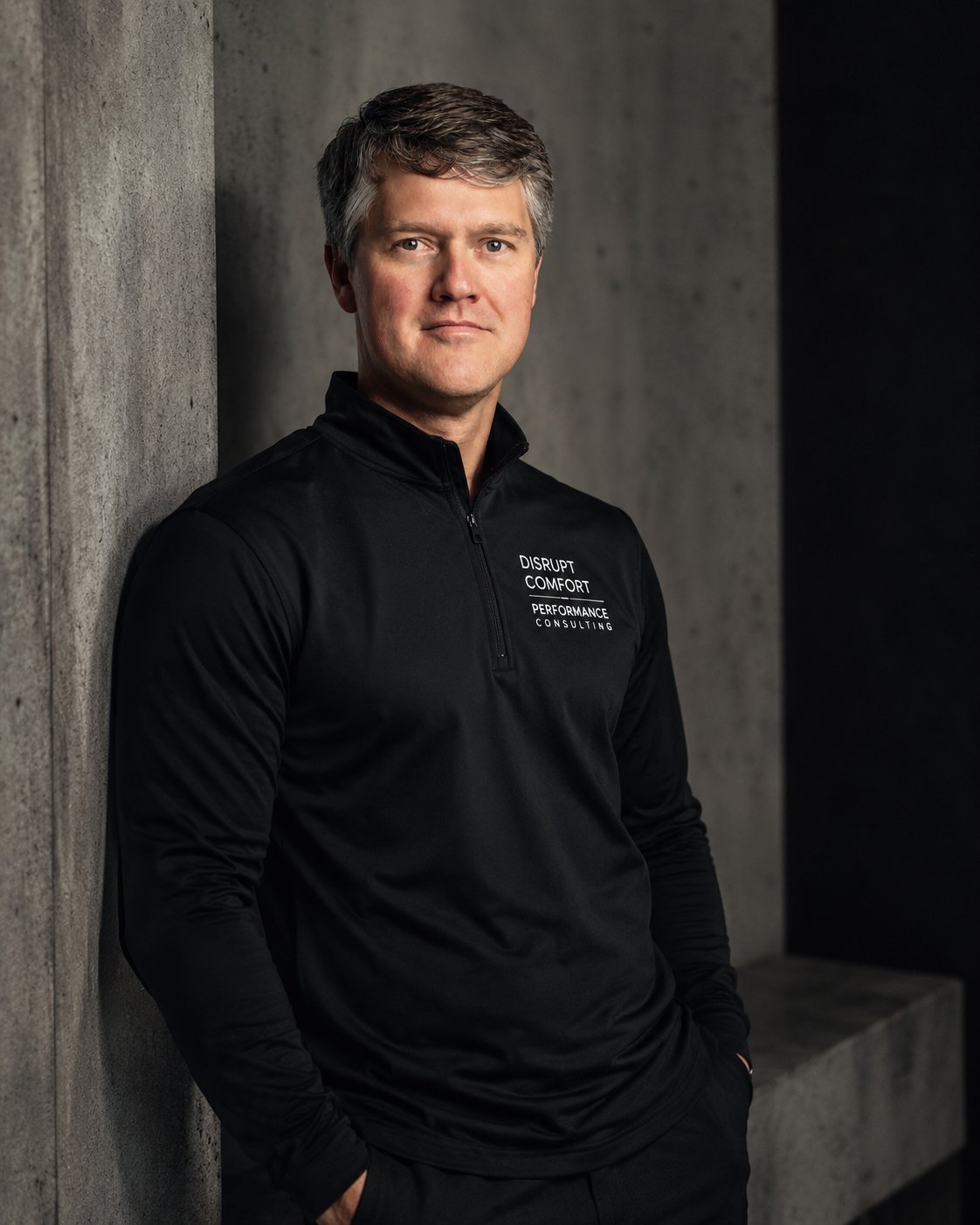 Dr. Edwin H. Adams · Monroe, Louisiana
The diagnostic
Dr. Edwin H. Adams came to organizational work the way a clinician comes to a patient — through the discipline of pharmacy, where nothing is prescribed until the cause is understood. ℞ is the mark of the recipe. The same logic governs this work: read the system accurately, then write the formula it actually needs.
Thirty years of organizational work sit behind that lens. It is built to find what's true one layer beneath the symptom — and to name it precisely enough that the right conversation can finally happen.
Read the system. Write the recipe.
Begin with a
If you can feel the friction but can't yet name its source, that's the right place to start. One conversation, no framework forced on you — just an accurate read of what's actually happening.
Start a Conversation